
Topical Wound Treatments

When it comes to wound care, the challenge is to strike a balance between keeping the wound clean and moist, while at the same time fighting off the bacteria and microorganisms that threaten the body’s natural ability to heal itself. A moist environment provides a perfect breeding ground for infectious microorganisms that can make the healing process not only painful and malodorous. Infection that occurs in a healing wound can cause complications and become costly to treat.

Throughout history, researchers and physicians have tried any number of topical treatments for wound care, including antibiotics, chlordexidine, hydrogen peroxide, iodine, silver and even honey.

The goal has always been to find the most effective and beneficial counterpart to sterile dressings and compression bandaging for wound care.

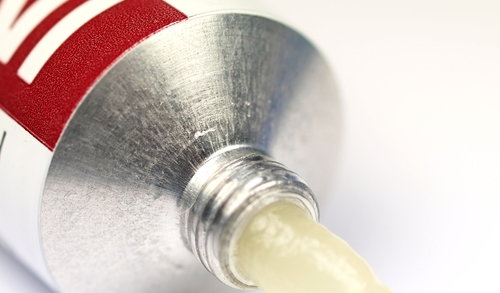
Today, hydrogels, isotonic saline gel, cadexomer iodine gel and other viscous substances are being used to help create a moist but sterile environment. These substances allow the tissue in and around the wound to slough off while keeping serious bacterial infections, like methicillin-resistant staphylococcus aureus (MRSA) and other “superbugs,” at bay.

Use of these newer solutions has proven to promote a more rapid healing timeframe and a better overall outcome for wound care patients. The addition of silver (Ag) to these newer substances helps ensure a sterile environment for healing, as the sustained release of silver ions to the wound is effective against a broad range of bacteria and other microorganisms, including methicillin and vancoycin-resistant strains, fungi, viruses and yeast.

Related Articles

Skin Substitutes

Skin substitutes as a form of wound closure have been found useful since the earliest centuries of medical science. Skin is made up of epidermis (uppe...

Biatain Foam

Biatain foam was introduced as early as the 1970s. Biatain foam is a soft, pliable dressing which is comprised of an outer layer that helps guard agai...

Biologic Debridement

Biologic debridement is the use of living organisms to remove necrotic or dead tissue from a wound. The most commonly used biologic debridement method...

Advanced Dressings

Biatain Foam Biatain foam is a soft, pliable dressing which is comprised of an outer layer that helps guard against bacteria and infection, and an in...

Growth Factor Therapy

Growth factor therapy is the use of growth factors to promote wound healing. Growth factors are substances secreted by the body whose function is to s...

Vacuum-Assisted Closure

Vacuum-assisted closure (VAC) is a sophisticated development of a standard surgical procedure—the use of vacuum-assisted drainage to remove bloo...

Nutritional Support for Wound Healing

Nutritional support for wound healing can greatly affect the three stages of the process: the inflammatory, proliferative, and remodeling phases. Poor...

Electromyography

Electromyography (EMG) is a diagnostic test that measures the health and function of the muscles and the nerves which controls these muscles.  H...

Nerve Studies

Nerve studies are also known as nerve conduction studies. These studies measure how well nerves send signals through the body. Uses This procedure i...

Compression Stockings

Compression stockings or socks are special stockings used for the treatment of venous diseases such as varicose veins. These stockings can exert press...

Vascular Studies

Vascular studies measure and assess the amount of circulation within the blood vessels. Uses This noninvasive procedure is used as a tool in the tre...

Total Contact Casting

Total contact casting is a method used to treat diabetic foot ulcers by fitting a non-removable cast around the affected leg. The whole cast is in con...

Hyperbaric Oxygen Treatment

Hyperbaric oxygen treatment, or hyperbaric oxygen therapy (HBOT), involves breathing 100 percent oxygen at increased atmospheric pressures to increase...

Low Level Laser Therapy

Low level laser therapy (LLLT) is a medical procedure used to treat pain and speed up wound healing. This treatment uses low-level lasers to alte...

Ultraviolet Light Therapy

Ultraviolet (UV) light therapy has been used for centuries to help in the treatment of many skin conditions, disorders and diseases. While exposure to...

At Home Wound Treatment

Applying first aid as initial medical care to a wound or an injury temporarily until a professional medical care is available can, in many cases, be l...

Ultrasound Therapy

Ultrasound therapy uses high-frequency sound waves far beyond those that are distinguishable to human hearing. These high-frequency sound waves can be...

Negative Pressure Wound Therapy

Negative pressure wound therapy is a medical procedure in which a vacuum dressing is used to enhance and promote wound healing in acute, chronic and b...

Wound Closure

Whether they are caused by surgery or injury, wounds generally must be closed for proper healing. Wound closure is typically done with sutures (stitch...

Sutures, Stitches, and Staples

Sutures, stitches and staples are used for the same purpose - to close wounds or surgical incisions - but they are not the same. For sutures, doctors ...

Nerve Conduction Study (NCS)

A nerve conduction study (NCS) is used to determine electrical conduction within motor and sensory nerves, essentially determining the functionality o...

Sharp Debridement

Sharp debridement is a surgical procedure that uses scissors, scalpels and other sharp instruments to cut away or remove infected tissue. It improves ...

Antibiotics

Topical Antibiotics Antibiotics are often prescribed to treat an infection topically. This means that you will apply antibiotic creams, ointments or ...
Find a Treatment Center
List Your Facility
Be found by clients looking for your exact skills. Learn more.